
Resilient Agriculture
Delta Institute has worked with farmers throughout the Midwest for more than a quarter century.
We’re expanding conservation in the Midwestern agricultural economy by focusing on sensible, actionable solutions for:
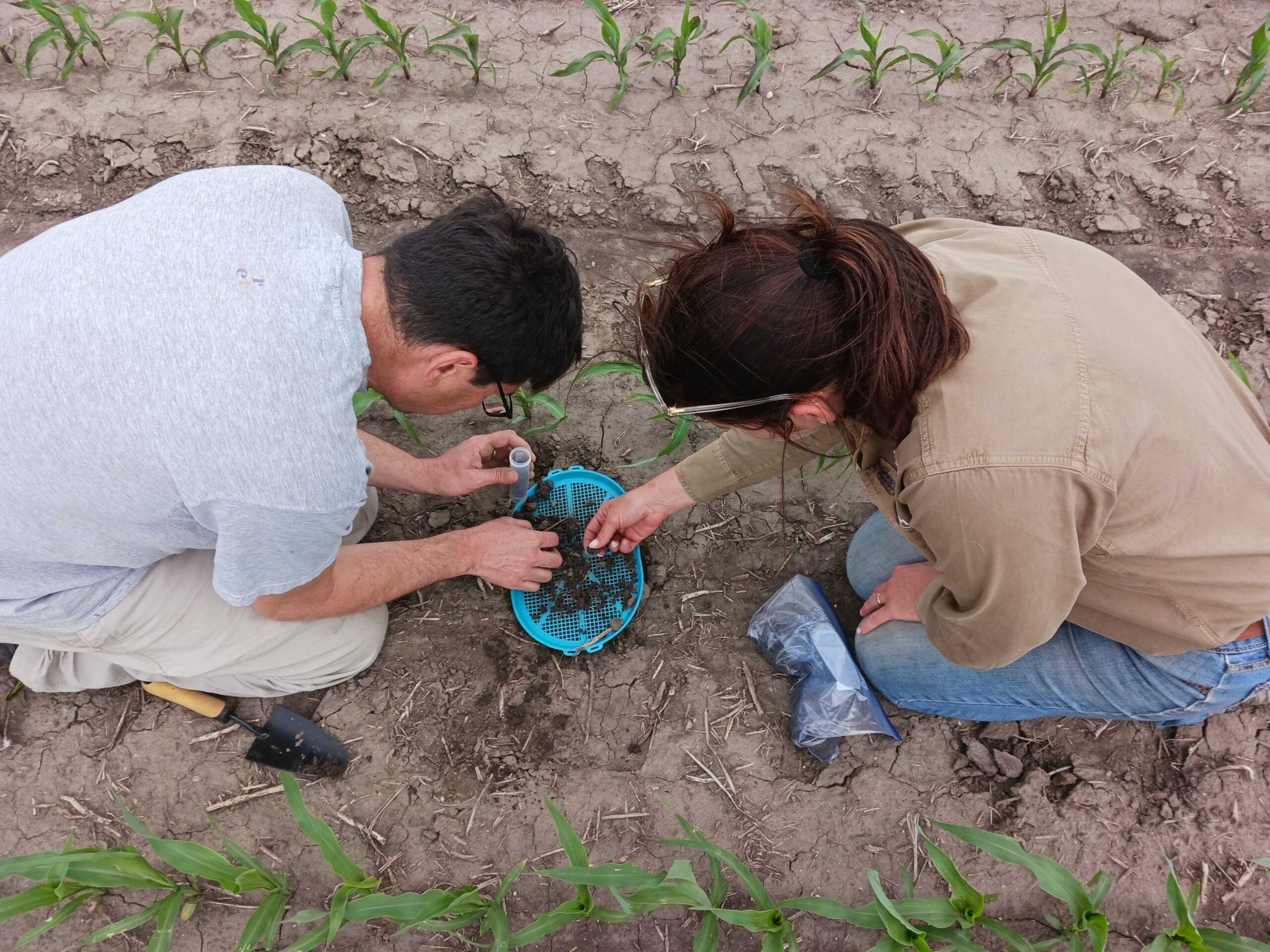
Soil Health
Farmland Valuation and Appraisal
Conservation-Focused Farming Practices
Carbon Sequestration
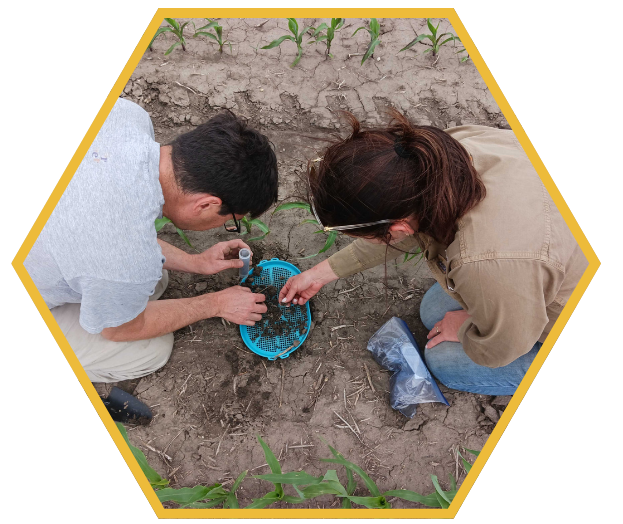

Using common sense in conservation.
Delta Institute supports Midwestern farmers as they transition to resilient practices to mitigate climate risks, increase crop yield, capture millions of tons of carbon, and strengthening a farmer’s bottom line.
OUR CURRENT IMPACT
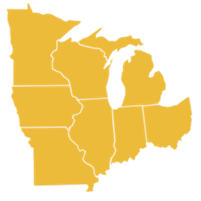
Expanding Conservation on 170,000+ Acres across 5 Midwest / Great Lakes States
Our ag projects span Illinois, Indiana, Michigan, Minnesota, and Wisconsin, with more than 77 counties and 31 Major Land Resources Areas (MLRAs) represented by the farmers we’re partnering with.
101,052,411.18 kg CO2e ha−1 yr−1 forecasted GHG reductions
On average, we believe that the carbon storage benefits of implementing SHMS can be estimated at a rate of 1 MT CO2e per acre per year (see Delta Institute’s report, “Getting Down to the Roots: A Soil Carbon Strategy for Illinois,” pp. 8-12). When considering the full potential over the 50-70 year lifetime of a practice, replenishing soil carbon to its potential could reach 62 MT CO2e per acre. According to the U.S. Environmental Protection Agency’s Greenhouse Gas Equivalencies Calculator, this amount of sequestered carbon is equivalent to removing 300 gasoline-powered passenger vehicles from the road for two years. Over the next two years, we estimate that we will triple the amount of farms and acreage adopting our soil health land valuation methodology, and we will continue scaling participation on a regular basis afterwards.
Working with 1,055 Farmers / Farms, and increasing each year
We’re grateful to the many farmers who are inviting us onto their fields, attending our workshops, and supporting our concensus efforts on soil health becoming a standard metric in the farmland appraisal process.
Exploring financial drivers with 6+ Ag Lenders
Delta Institute is working with agricultural banks, lenders, and financing firms to design and co-create new loan products and related financial levers to recognize soil health in farmland appraisal, valuation, and lending processes. We’re hosting roundtable discussions throughout the Midwest as we begin creating a suite of nouveau financial drivers to spur permanent and consistent on-farm conservation.
WHAT’S NEXT
More Farmers, Appraisers, Acres, States
Our clearcut goal is for Soil Health to become a standard metric within farmland valuation across all financial levers. Deeper saturation is beneficial to achieve the crucial “tipping point” to disrupt status quo. In each State we work within, we aim to engage a minimum of 200+ farmers and agricultural finance professionals across five counties with an approximate acreage goal of 25,000 farmland acres.
Incorporation of Additional On-Farm Conservation Practices
Beyond no-till and cover crops, other comparable on-farm conservation practices that may be incorporated into valuation approaches include bio-digesters for manure, nutrient management/variable-rate fertilizer applications, edge-of-field buffers (e.g., prairie strips, windbreaks, riparian buffers), crop rotations, and adaptive grazing. Delta Institute is deeply interested in exploring these additional opportunities for Soil Health incorporation into farm financing.
Engaging More Producer Types
Our farmer representation has understandably skewed into commodity crops, namely the Midwest staples of corn and soybeans. Delta Institute welcomes engaging farmers within the dairy sector, potato and grain growers, as well as fruit and nut tree operations will ensure that emerging soil health financial levers are streamlined, scalable, and practical for appraisers, lenders, and farmers alike across production sectors and related operations.

Resilient Agriculture
Resilient Agriculture
Resilient Agriculture

Resilient Agriculture
Resilient Agriculture
RECENT PROJECTS IN OUR AG PORTFOLIO
WHY CHOOSE DELTA INSTITUTE?

INNOVATION
Named the winner of Illinois Green’s Emerald Award for Green Innovation in 2018.

NONPROFIT
Partnering with a 501(c)(3) nonprofit means we prioritize mission over profits. We are fully registered to do business like any other firm.

COLLABORATION
Named a finalist for the inaugural Chicago Prize in 2020 in partnership with LVEJO.

TRANSPARENCY
Winner of Candid’s Platinum Seal of Transparency for 6 years — a recognition received by fewer than 1% of all nonprofits.
EXCELLENCE
Received Indiana Governor’s Award for Environmental Excellence in both 2023 and 2024.
ACCOUNTABILITY
Received Charity Navigator’s highest four-star “Give with Confidence” rating annually.
REGIONAL
Named 1 of 29 Environmental Finance Centers supporting the EPA’s commitment to water access for all.

TRUSTED PARTNER
Hired by the Office of the Mayor to develop the Chicago Waste Strategy, which is still being implemented today.