
Soil Health Appraisals and Financing
We’ve spent years exploring, researching, and testing Soil Health within farmland appraisals and financing
After several years of work, Delta Institute is significantly expanding our efforts to place a consistent value on Soil Health within the farmland marketplace, notably within the appraisal and financing processes, so that the health of our region’s soil and water are a commonplace metric. Our goal is for millions of acres to adopt Soil Health Management Systems (SHMS), with demonstrable soil- and water- improvement.
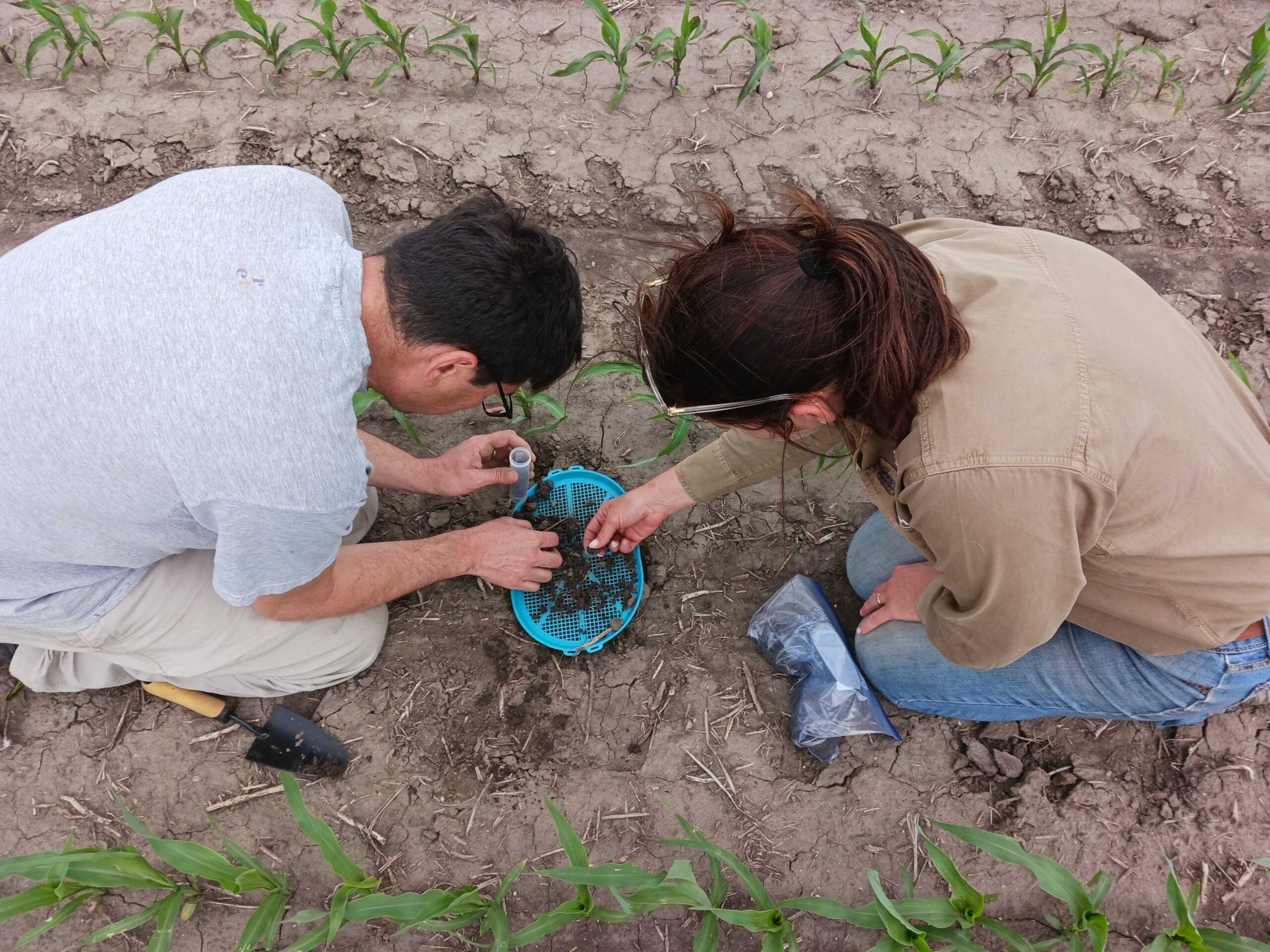
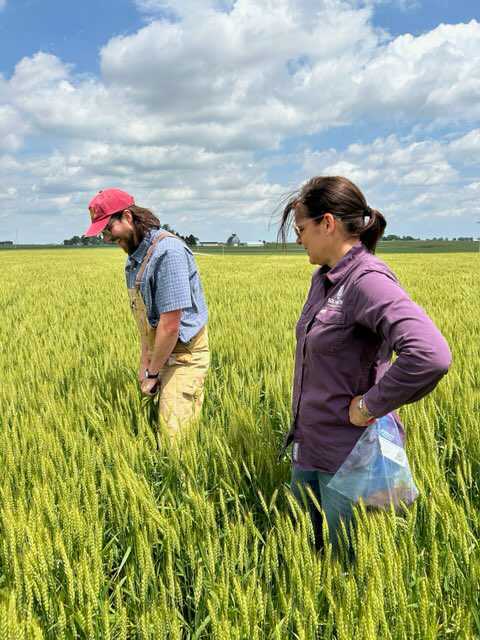
Enacting conservation on working lands requires revising the status quo.
All farmers have their land appraised and access financing. Incorporating Soil Health in these commonplace market drivers would result in extensive adoption of soil- and water- focused management practices, while improving a farmer’s bottom line by rewarding healthy soils on-farm.
IN BRIEF: WHAT IS SOIL HEALTH
Inherent soil characteristics like soil texture and depth to bedrock are independent of use and management practices, though they impact the way soil functions. For example, sandy soil drains faster than clay soil due to differing particle size. Deep soil has more space for roots to spread than soils with bedrock near the surface. Dynamic soil attributes are related to how soil changes in response to various management approaches. Specific management choices affect the amount of soil organic matter, soil structure, bulk density, and nutrient holding capacity. Together, these properties indicate a soil’s capacity to function.
Soil quality refers to a soil’s ability to be used in agricultural production. Soil health takes this a step further, considering soil as a living entity, where maintaining its soil organic matter and microbial activity are essential for long term use and sustaining ecosystems. Soils respond differently to management depending on the inherent properties of the soil and the surrounding landscape. Soil health indicators are quantifiable properties of soil or plants that inform how well the soil functions, and can be physical, chemical, and biological properties, processes, or characteristics of soils. These indicators can also be morphological or visual features of plants. Soil Health Management Systems (SHMS) focuses on farming practices that have demonstrable benefit to soil and water, such as cover cropping, field rotation, edge-of-field, no-till, and other practices that are commonly accepted best soil management practices.
INCORPORATING SOIL HEALTH IN ON-FARM FINANCING
Expanding knowledge and understanding of soil health
Delta has created dozens of resources over the past years with a clear goal in mind: creating a reasonably consistent, “uniform” Soil Health definition across the Midwest. We’ve worked with hundreds of farmers and dozens of ag sector firms and agencies to create a series of easy-to-use resources and materials to make a concise, clear-cut case for Soil Health on-farm.
Updating farmland appraisals, leasing, and land valuation
If building Soil Health can demonstrably increase the value of farmland, then a clear value proposition exists to undertake soil and water quality- focused efforts. Delta Institute believes that soil health must be valued as a property characteristic and have a tested replicable process to incorporate soil health into commonly accepted appraisal practices. No real estate appraisal approaches currently exist to empirically assess the value ($/acre) of soil health, hence our focus.
Bringing ag financing to the roundtable
Market-based interventions that align Soil Health and land valuation must be pragmatic, market-based, and easily integrated into existing business tools and processes for them to be of actual use. Delta is working with farmland appraisal firms, ag banks, and farm financing entities to identify, develop, and implement market drivers that incorporate Soil Health into farm financing to increase adoption of Soil Health practices across the Midwest.
WHAT WE’RE DOING RIGHT NOW
Piloting Midwestern Soil Health Appraisals
Delta Institute is creating regional consensus around how to factor Soil Health into the standard farmland appraisal process throughout the Midwest. To help accomplish this goal, we are implementing soil health appraisal pilots in Illinois and Michigan, to help broaden the data, understanding, and practice of successfully factoring in soil health valuation within the farmland appraisal process. We’re currently working across three Major Land Resource Areas (MLRA) in both States to broaden the depth of local-based Soil Health data, context, and management systems that could be placed within the area’s appraisal and financing processes. We’re expanding this work, and anticipate working within Wisconsin next to pilot on-farm SHMS and Soil Health-focused appraisals.
Building Regional Consensus for Soil Health Appraisals and Financing
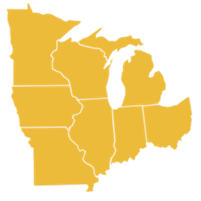
Delta Institute is creating regional consensus around how to factor Soil Health into the standard farmland appraisal process, by engaging hundreds of stakeholders throughout Illinois, Indiana, Michigan, Minnesota, and Wisconsin. We’re convening agricultural banks, farm financiers, and appraisal firms to identify, develop, and implement market drivers to increase adoption of soil health practices.
Consensus building, as a broad definition used by Delta Institute within our projects, is accomplished by achieving a reasonable degree of authentic buy-in from notable actors within the space that we are operating within. This then allows for in-market expansion that does not require our active facilitation (i.e. begins to self-perpetuate). For this scope, expanding partnerships and building consensus among lending organizations and agricultural banks has the potential to catalyze our efforts and open pathways for Midwestern farmers to invest in the stewardship of their land and pay dividends for future generations.
WHAT WE’RE WORKING TOWARD
The ultimate goal of our work is to drive change in agricultural land appraisal practices in the Midwest—with strategies for scaling nationwide—that result in broader adoption of conservation focused land management that improves the health of our soil.
WHY CHOOSE DELTA INSTITUTE?

INNOVATION
Named the winner of Illinois Green’s Emerald Award for Green Innovation in 2018.

NONPROFIT
Partnering with a 501(c)(3) nonprofit means we prioritize mission over profits. We are fully registered to do business like any other firm.

COLLABORATION
Named a finalist for the inaugural Chicago Prize in 2020 in partnership with LVEJO.

TRANSPARENCY
Winner of Candid’s Platinum Seal of Transparency for 6 years — a recognition received by fewer than 1% of all nonprofits.
EXCELLENCE
Received Indiana Governor’s Award for Environmental Excellence in both 2023 and 2024.

ACCOUNTABILITY
Received Charity Navigator’s highest four-star “Give with Confidence” rating annually.
REGIONAL
Named 1 of 29 Environmental Finance Centers supporting the EPA’s commitment to water access for all.

TRUSTED PARTNER
Hired by the Office of the Mayor to develop the Chicago Waste Strategy, which is still being implemented today.

We’d love to hear from you!
If you’re thinking about getting involved in our work on soil health and farmland valuation, we’d love to schedule a call. Please reach out to us to schedule a free consultation at either 312-554-0900 ext. 31 or send us an email.